Table Of Content
UI copy requires a deep understanding of the target audience’s cultural elements, idioms, and communication styles. It considers factors such as local customs, values, and sensitivities, ensuring that the content is respectful and resonates with the intended users. Effective UI copy for international audiences in not just text translation, it is much more than that.
Ecommerce UX: Design Strategies and Best Practices for 2024 - Shopify
Ecommerce UX: Design Strategies and Best Practices for 2024.
Posted: Mon, 27 Nov 2023 08:00:00 GMT [source]
key elements of UI design
It will also help you decide which elements should have more visual weight than others. By applying the unity principle of design, designers can get a clear message across while keeping the design is visually appealing and easy to understand. Several bootcamp companies offer UI/UX design programming, which may allow you to gain the necessary technical skills with added flexibility. It may also be worth looking at the bootcamps and certification programs offered by universities and companies. Depending on the program, the price may be cheaper than a traditional degree while at the same time still offering project-based learning, resume and networking help, and mentorship opportunities.
What is visual hierarchy
These features should contribute to the user experience at each stage of the product's operation without being overwhelming and hard to understand or use. At this stage, UX designers identify the product's features to determine its full functionality. They work closely with the development team to determine possible technical constraints. Rather, the term refers to a UX generalist who not only has a full set of UX skills but also excels at graphic design and coding.
Pursuing a career in UI and UX: What you should know - The Daily Star
Pursuing a career in UI and UX: What you should know.
Posted: Thu, 01 Feb 2024 08:00:00 GMT [source]
The Job of the UX Designer Is About to Undergo Radical Change
UI copy focuses specifically on the microcopy within the user interface. UX content requires a deep understanding of content and elements of content such as Product descriptions, instructional guides, error messages, tooltips etc. The final step is to track content performance metrics, such as engagement, conversions, and user behavior. And then we have to use these insights to continuously iterate the UX content and refine the content. This has to be done until you find a good UX content for your design. The number of years of college required to become a UX designer can vary.
This process involves planning, developing strategy, executing, and analyzing projects after implementation. UX designers spend a lot of time planning for future projects, analyzing existing designs, and tracking the performance of their designs. One way to think of UX design is to consider the entire process or journey a user experiences when interacting with a product or service. How is the user introduced to the service or product — through advertising, blogs, or something else?
Even after a product hits the market, UX designers continually track user feedback and analyse usage data to uncover improvement opportunities. Products often go through multiple iterations of refinement to better suit user needs and ensure that the product successfully meets UX expectations. The first step in the UX design process is understanding the brand and its users. User research is the process of getting insights from real users to understand their needs and pain points. This allows designers to search for common problems and then focus their efforts on developing the right solutions. A user experience (UX) is therefore made up of many user interfaces (UI), which come together in a (hopefully) seamless flow to form a product.
Testing the structure and functionality of applications and services is a critical skill for UX designers. Wireframes act as blueprints for each part of an interface, showcasing how it works — not just how it looks. Prototypes allow designers to test functionality for a product or service, and this allows designers to make sure a system works correctly before it goes into production. With the global VR market expected to be worth around $165.9 billion by 2030, UX designers will increasingly be required to design immersive experiences.
Transforming the design process at
After all, the goal is to solve user problems in a way that also solves problems for the business. The outcome of this activity is usually a list of pain points and needs, a user persona, and a user journey map. This research informs our design decisions, so it’s important to establish a clear picture of our users. Having an understanding of both UI and UX design is important for anyone wanting to work in the field. However, your specialization depends on your skill set and the kind of work you want to do. Design skills are important for both fields, but UI design is very design-focused and a great option for artistic individuals.
Is there such a thing as a UI/UX designer?
In reality, tasks will vary depending on both the size and the specific needs of the company. UX designers don’t just come up with solutions to user problems; they also need to present their ideas and designs to key stakeholders as part of their day-to-day work. When discussing UX, user interface (UI) design will inevitably crop up. However, it’s important to recognize that, despite often being used interchangeably, UX and UI are two different things. Both UX and UI designs are equally important for the product's success. Their high ROI stems from the benefits such a user-oriented approach can provide.
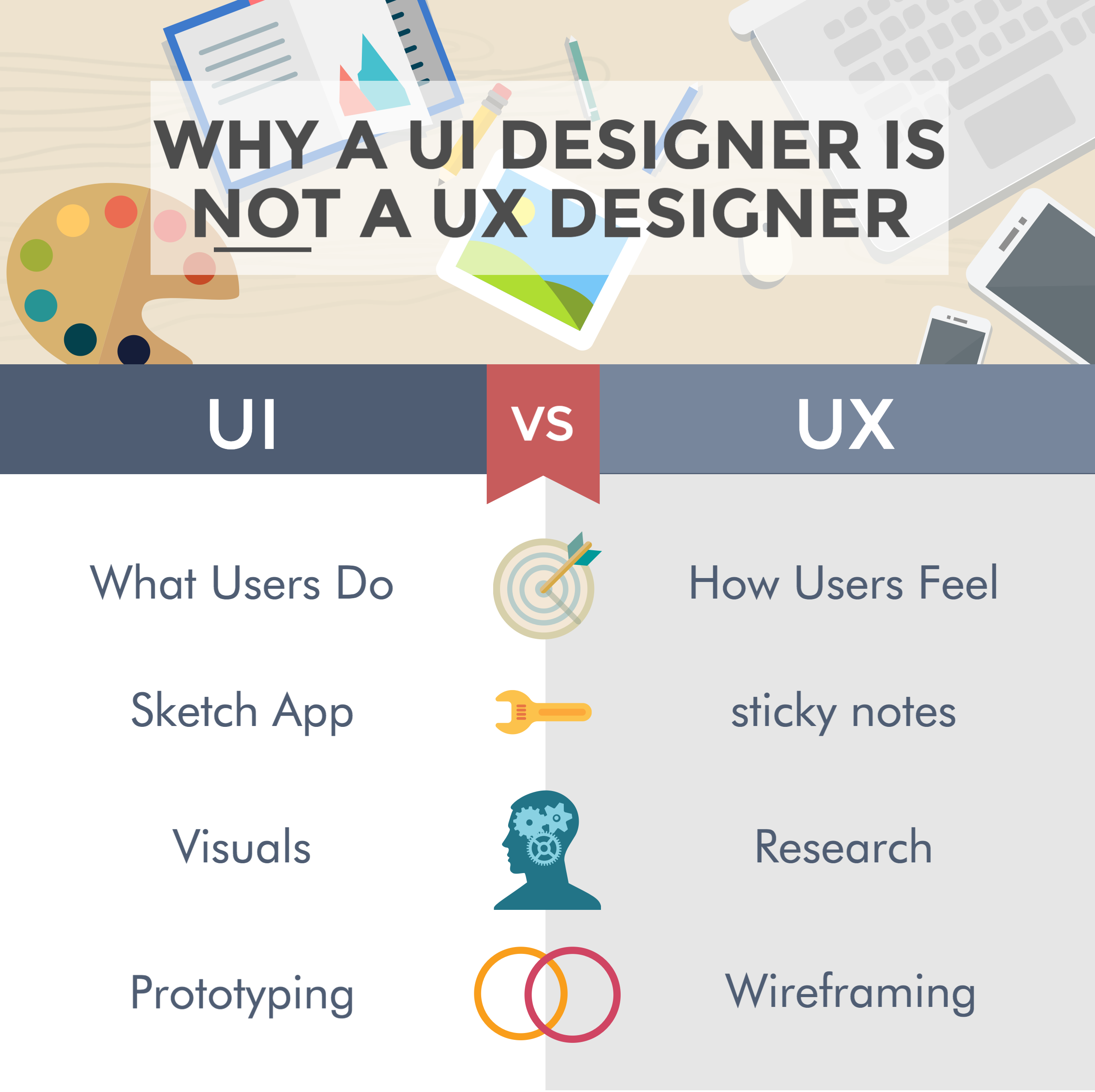
With IA sketched out, UX designers can start turning ideas into tangible models, such as wireframes and prototypes. Teams use these proofs of concept to test ideas, define requirements, and set feature priorities. Figma's online prototypes facilitate collaboration among designers, developers, and product owners, bringing everyone together to produce a more responsive, accessible, usable, and engaging end product. If you want to figure out which career path is right for you, it’s important to consider the key skills required by UX vs. UI designers, as well as the typical day-to-day tasks of each. A UX designer thinks about how the experience makes the user feel and how easy it is for the user to accomplish their desired tasks. They also observe and conduct task analyses to see how users actually complete tasks in a user flow.
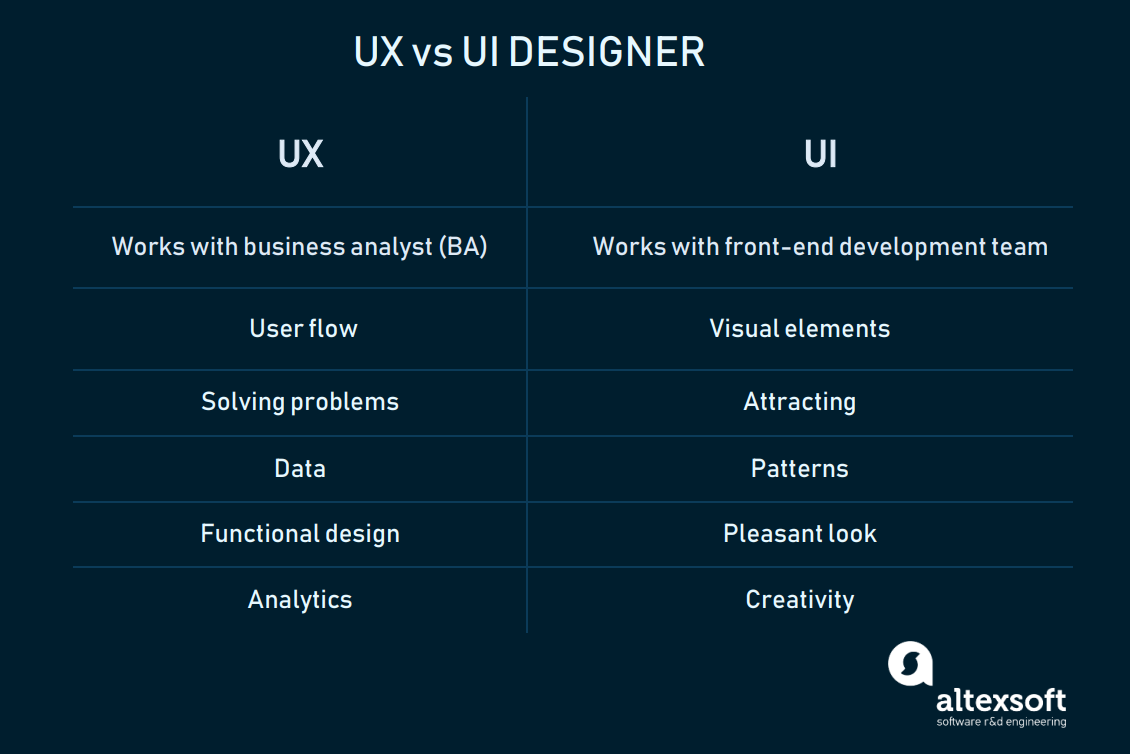
On the hand an interface centered approach focuses on creating visually appealing and user friendly interfaces. A UI designer might start with a sitemap or create wireframes that clearly establish a content hierarchy. Then the design must convey that hierarchy through the use of visual design elements. As a UX designer, the business goals, technical constraints, and user needs must all be taken into consideration.
If you’re seriously considering becoming a user experience designer, follow these five steps to help you get there as quickly as possible. Most user experience designers have basic knowledge of HTML, CSS, and Javascript. Although, they haven’t necessarily learned it to become a UX designer, more so because of past experience or because they want to collaborate better with their engineering colleagues. As they gather real user feedback and study the live website’s analytics, they adjust the website accordingly. UX design is an iterative process — one that aims to always improve the user experience and to help the brand exceed its goals over time. UI designers rely on design research and trends, industry analysis, and web design principles in order to create an interface and interactions that users are comfortable and confident with using.
UX researchers can observe how users interact with the product, survey users to draw out more nuanced insights, and analyse data to uncover patterns that UX vs UI designers can use to improve the UX. UX and UI designers then work together to refine the product until it meets the standards of both parties. UX research, UX design, and UX testing can uncover improvements the UI designer implements in the interface. This often requires multiple iterations of testing and feedback to suit user needs best and ensure that the product successfully meets expectations. UI designers use UX wireframes and prototypes to plan the product's structure. They focus on laying out the product's elements and how they should interact with the user.
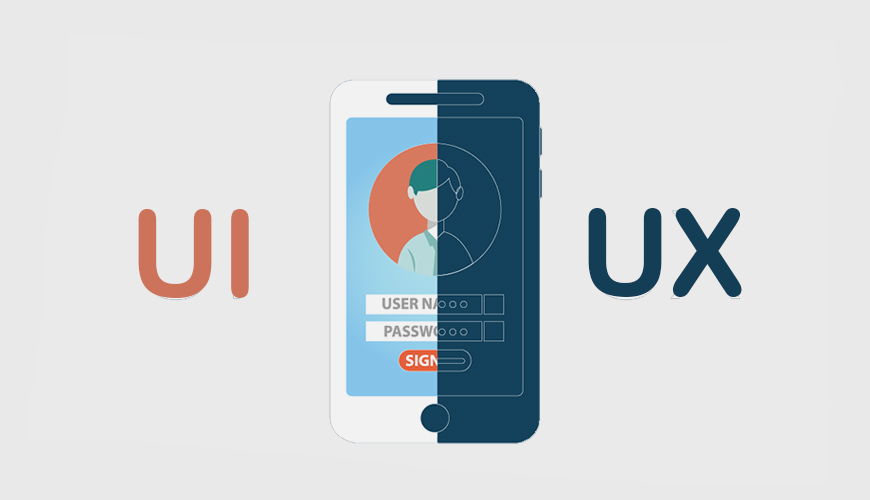
Similarly, iterative UX design processes indicate the importance of continued improvements. UI design is a specialized subset of UX design, enhancing the user experience by optimizing how users physically interact with the product touchpoints. UX identifies user wants and needs, while UI takes those elements and makes them visually appealing to users. A successful UX and UI design can improve user acquisition, engagement, and retention. UX design is about the end-to-end user experience and how users feel when using your product.
While a degree isn’t always necessary to get a job as a UX or UI designer, having one can often open up new opportunities. UX designers might get a degree in a related field such as computer science, psychology, or design. UI designers, on the other hand, might graduate with a degree in digital design, graphic design, or interaction design. UI refers to the screens, buttons, toggles, icons, and other visual elements that you interact with when using a website, app, or electronic device.
It communicates the brand mission, streamlines brand awareness, appeals to the customers' values, and drives the user's trust. When people wake up in the morning, they rarely think about finding a toothbrush, squeezing the toothpaste, and pressing the brush against their teeth. The process is so intuitive and automatic many people never remember it. The first stage involves evaluating the company's and users' goals that define the design. Company goals are determined through stakeholder interviews, while user goals are identified through user research. The app offers valuable solutions that address the user's pain points (good experience).


No comments:
Post a Comment